Check Valve Selection and Water Hammer
A check valve stops reverse flow; the real question is how quickly it stops it. A slow-closing check valve becomes the source of water hammer.
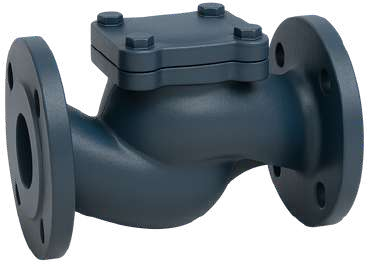
When a pump stops, the water in the line continues forward for a moment and then reverses under gravity and pressure difference. A check valve cuts off that reversal. In this seemingly simple job the critical factor is timing: the check valve must close before the reverse flow gains speed.
Why does water hammer originate at the check valve?
A slow-closing check valve lets the reverse flow accelerate. When the disc finally closes, the moving mass of water stops abruptly and its kinetic energy becomes a pressure wave. That wave travels along the line, reflects, and stresses pipe, flanges and weld seams. That metallic “hammer” sound heard on site is exactly this.
In other words, the source of water hammer is often not the pump but a wrongly selected or wrongly positioned check valve.
Types and their behaviour
Spring (lift) check valve
A spring pushes the disc towards the closed position. As soon as flow stops the spring closes the disc; closing is fast and the reverse flow cannot gain speed. Because the spring force must be overcome, the pressure drop is somewhat higher than a swing type. The spring also allows operation in vertical lines.
Swing check valve
The disc swings on a hinge and is opened by the flow. When fully open it obstructs little of the cross-section, so the pressure drop is low. Closing depends on gravity and reverse flow, so it is slower than a spring type; on rapidly stopping pumps the water hammer risk is higher.
Dual plate check valve
Two half discs are spring-loaded on a central shaft. Because the travel of the plates is short, closing is fast; face-to-face length and weight are low. On large diameters the space and cost advantage is clear.
Installation rules
- Flow direction must follow the arrow on the body. A check valve installed backwards keeps the line permanently closed; at commissioning this shows up as “the pump is not delivering”.
- Do not fit it in a turbulent zone. Immediately after an elbow, pump discharge or valve, the disc flutters and the hinge wears quickly. Leave a straight pipe run upstream.
- Type selection for vertical lines is evaluated separately. Not every check valve works in every orientation; gravity-closing types may not behave as expected in vertical upward flow.
- Make sure the disc can open fully. At insufficient flow the disc flutters half open, producing both noise and premature wear.
Note: A water hammer problem may not be solved by changing the check valve alone. The pump stopping ramp, the length of the line and any air vessel or surge tank must be considered together.
Summary
The question when selecting a check valve is not “which is cheaper” but “what happens on this line when the pump stops”. With a rapidly stopping pump and a long line, choose a fast-closing type; on long, slow lines where pressure drop is critical, a swing type is more suitable.
From the catalog
Products mentioned in this article
The technical values of the products below are extracted from the company's printed catalog, not from the article text.
Flanged Lift Check Valve Straight Type
Check Valves
- Bağlantı
- DIN1092-2
- Çalışma basıncı
- PN16
- Çalışma sıcaklığı
- -10°C / +220°C
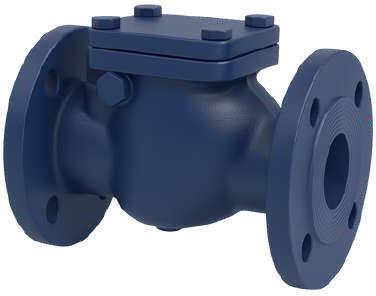
Flanged Swing Check Valve
Check Valves
- Bağlantı
- DIN1092-2
- Çalışma basıncı
- PN16
- Çalışma sıcaklığı
- -10°C / +120°C
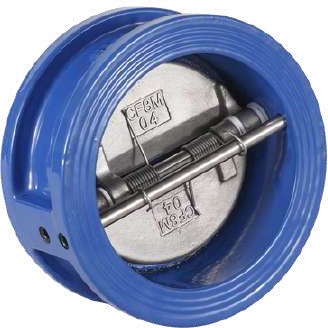
Dual Plate Check Valve
Check Valves
- Bağlantı
- DIN1092-2
- Çalışma basıncı
- PN16 / PN40
- Çalışma sıcaklığı
- -10°C / +100°C
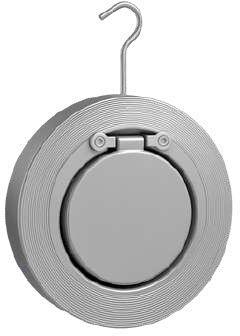
Wafer Type Swing Check Valve
Check Valves
- Bağlantı
- DIN1092-2
- Çalışma basıncı
- PN16 / PN40
- Çalışma sıcaklığı
- -10°C / +100°C
Read next
Related articles
Fire Line Fittings and Periodic Inspection
Fittings on a fire line may stand unused for years and must work first time at exactly the moment they are needed.
Butterfly Valves: Space and Cost Advantage on Large Diameters
On large-diameter lines, a butterfly valve instead of a gate valve usually saves space, weight and cost at once.
Fitting Selection for Marine Applications
Three things stress a fitting on board: saltwater, continuous vibration and limited maintenance access. Selection follows all thre...
Let us select the right product for your project
You can write to our technical team with questions about the topic in this article.