Fire Line Fittings and Periodic Inspection
Fittings on a fire line may stand unused for years and must work first time at exactly the moment they are needed.
Fire installations differ from all others in one respect: they are never used in normal operation. A valve in a cooling line moves several times a week and any seizing is noticed immediately. A valve in a fire cabinet stands in the same position for years; that it has seized is discovered only when it is needed.
The expected property: opening first time
What is expected from a fire hose valve is that it can be fully opened quickly with a single movement. In an emergency there is no time to fiddle with partial openings. Fire valves are therefore selected on fast and positive opening, not on throttling capability.
The second expectation is durability: in a valve that stays still for a long time the stem packing can dry out and moving parts can oxidise and seize together. Material and packing selection takes that dormant period into account.
Straight and angle types
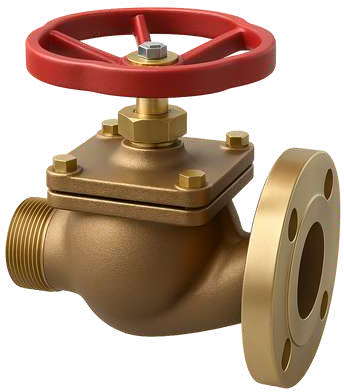
The straight type is used on inline runs, with inlet and outlet on the same axis. The angle type turns the flow through 90°. On a line emerging from a wall, the angle type directs the hose downwards, removing the need for an additional elbow and preventing the hose from being crushed in a sharp bend. Because it saves space inside a fire cabinet, it is a common choice.
Periodic inspection routine
Fire fittings are safety equipment; a “replace it when it breaks” approach does not apply, because the fact that it is broken is discovered only when it must be used.
- Open and close the valve fully. That single action both detects and prevents seizing. It can be done without pressurising the line.
- Check for leakage at the packing. Packing that has dried out can leak on first pressurisation.
- Check the coupling and cap gasket. A hardened gasket leaks at the moment of connection and reduces flow.
- Check access. If the cabinet is obstructed, the fitting inside being sound is of no use.
- Record the inspection. If the date and the person are not written down, the inspection counts as not done.
Additional note for seismic zones: If no flexible element has been used where the fire line crosses building expansion joints, the line may not hold pressure in a post-earthquake fire. The fire line is among the first systems that must work after an earthquake.
Summary
The selection criterion for fire line fittings is as much “what happens while it waits” as “how durable is it”. Choosing the right type is half the job; a regular open-and-close routine is the other half.
From the catalog
Products mentioned in this article
The technical values of the products below are extracted from the company's printed catalog, not from the article text.
Straight Type Fire Hose Valve
Fire Hose Valves
- Bağlantı
- EN1092-2
- Çalışma basıncı
- PN16
- Çalışma sıcaklığı
- -10°C / +120°C
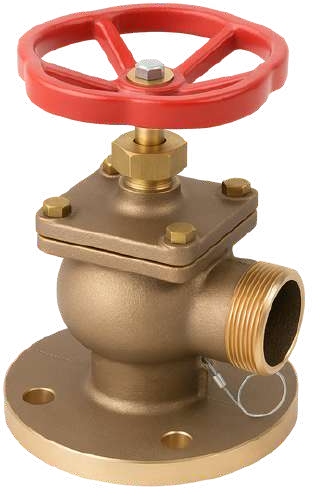
Angle Type Fire Hose Valve
Fire Hose Valves
- Bağlantı
- EN1092-2
- Çalışma basıncı
- PN16
- Çalışma sıcaklığı
- -10°C / +120°C
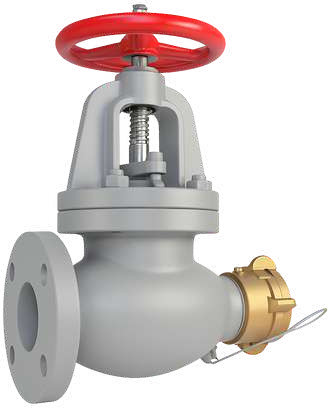
JIS Straight Type Fire Hose Valve
Fire Hose Valves
- Bağlantı
- JIS B2220
- Çalışma basıncı
- 5 Kgf/Cm2 10 Kgf/Cm2
- Çalışma sıcaklığı
- -10°C / +205°C
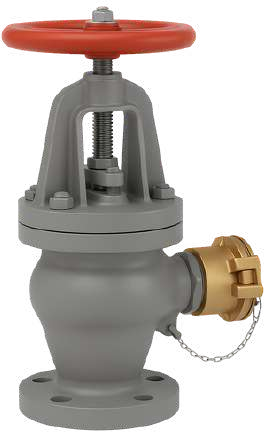
JIS Angle Type Fire Hose Valve
Fire Hose Valves
- Bağlantı
- JIS B2220
- Çalışma basıncı
- 5 Kgf/Cm2 10 Kgf/Cm2
- Çalışma sıcaklığı
- -10°C / +205°C
Read next
Related articles
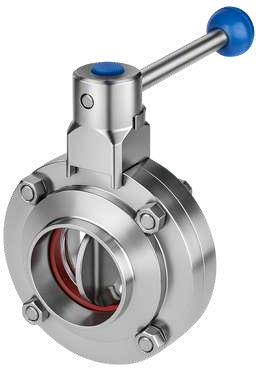
Butterfly Valves: Space and Cost Advantage on Large Diameters
On large-diameter lines, a butterfly valve instead of a gate valve usually saves space, weight and cost at once.
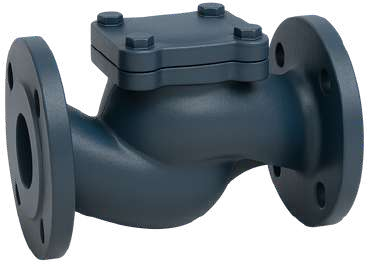
Check Valve Selection and Water Hammer
A check valve stops reverse flow; the real question is how quickly it stops it. A slow-closing check valve becomes the source of w...
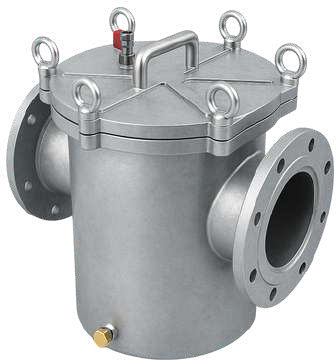
Fitting Selection for Marine Applications
Three things stress a fitting on board: saltwater, continuous vibration and limited maintenance access. Selection follows all thre...
Let us select the right product for your project
You can write to our technical team with questions about the topic in this article.