Steam Trap Selection and Common Mistakes
A steam trap is a small fitting, but it directly determines the efficiency of a steam system. A failed trap either leaks live steam or leaves condensate in the line.
Steam is an energy carrier and it delivers its energy by condensing. Condensed steam becomes water; if that water is not removed from the line, two problems begin. First, it covers the heat transfer surface and reduces efficiency. Second, it is dragged along by the steam flow and produces water hammer — an impact severe enough to break pipes, flanges and fittings.
A steam trap discharges this water but does not allow live steam to escape. The duty is one sentence; the difficulty is doing both jobs at once, automatically.
Two basic types
Float trap
A float rises with the condensate level and opens the discharge orifice. It discharges continuously as condensate arrives and responds quickly to changing load. It is preferred at points with variable load, such as heat exchangers, coils and process equipment. It needs a separate air vent to discharge non-condensable gases.
Thermodynamic trap
Its only moving part is a disc, opened and closed by the pressure change arising from the velocity difference between steam and condensate. Its construction is simple, robust and compact. It is common on outdoor lines where freezing is a risk and at drain points on main steam distribution lines. Because it operates intermittently, it is not preferred at very low loads.
Questions that decide the choice
- Is the load constant or variable? If variable, a float trap is more suitable.
- Is the point indoors or outdoors? Where freezing is a risk outdoors, the robustness of the thermodynamic type is an advantage.
- Is there back pressure? If there is a return to a condensate collection line, the back pressure must fall within the trap's operating range.
- Is there a non-condensable gas problem? Accumulated air and CO₂ reduce heat transfer and cause corrosion.
The four most common field mistakes
- Mounting the trap above the level of the equipment. Condensate should reach the trap by gravity; if it must be lifted, that has to be a deliberate design decision with back pressure taken into account.
- Not fitting a strainer upstream. Scale and installation debris block the trap orifice; a blocked trap leaves condensate in the line.
- Connecting several points to one trap. If two points at different pressures share a trap, the higher-pressure side blocks the discharge of the lower-pressure side.
- Not noticing the failure. A trap stuck open leaks steam silently; a trap stuck closed reduces efficiency silently. Neither announces itself.
Periodic inspection: Steam traps should be checked at least once a year. Ultrasonic listening or measuring the discharge pipe temperature are practical methods that need no dismantling. In an uninspected steam system, the proportion of failed traps quietly increases over time.
Summary
The steam trap is one of the lowest-cost, highest-impact fittings in a steam system. Regular inspection and an upstream strainer determine system efficiency just as much as choosing the right type.
From the catalog
Products mentioned in this article
The technical values of the products below are extracted from the company's printed catalog, not from the article text.
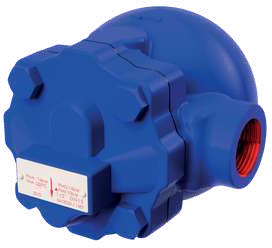
Ball Float Steam Trap Type:20
Steam Traps
- Bağlantı
- DIN2533 BSP & NPT
- Çalışma basıncı
- PN14
- Çalışma sıcaklığı
- -10°C / +250°C
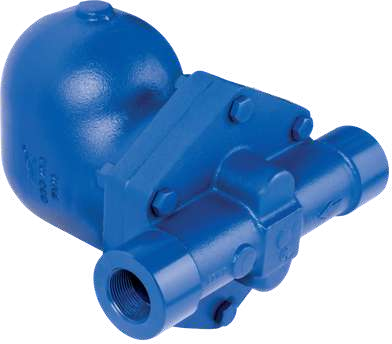
Ball Float Steam Trap Type:25
Steam Traps
- Bağlantı
- DIN2533 BSP & NPT
- Çalışma basıncı
- PN14
- Çalışma sıcaklığı
- -10°C / +250°C
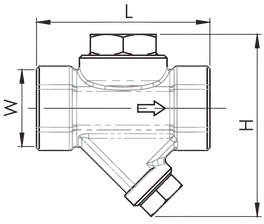
Forged Steel Body Thermodynamic Steam Trap
Steam Traps
- Bağlantı
- EN1092-1 BSP & NPT
- Çalışma basıncı
- PN46
- Çalışma sıcaklığı
- -10°C / +400°C
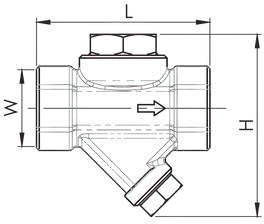
Stainless Steel Body Thermodynamic Steam Trap
Steam Traps
- Bağlantı
- EN1092-1 BSP & NPT
- Çalışma basıncı
- PN40
- Çalışma sıcaklığı
- -10°C / +400°C
Read next
Related articles
Fire Line Fittings and Periodic Inspection
Fittings on a fire line may stand unused for years and must work first time at exactly the moment they are needed.
Check Valve Selection and Water Hammer
A check valve stops reverse flow; the real question is how quickly it stops it. A slow-closing check valve becomes the source of w...
Fitting Selection for Marine Applications
Three things stress a fitting on board: saltwater, continuous vibration and limited maintenance access. Selection follows all thre...
Let us select the right product for your project
You can write to our technical team with questions about the topic in this article.