Globe, Ball or Gate Valve: Which One Goes Where?
All three valve types shut off the line, but they do not do the same job. Throttling, tight shut-off or low pressure drop — that question determines the choice.
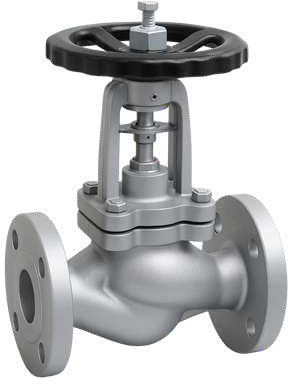
The first question when specifying a valve is not “which brand” but what do I expect this valve to do. Three different valve types of the same size will all pass the same fluid; but one is designed to modulate flow, one to close quickly, and one to stay open with almost no resistance. Choosing the wrong type is rarely a quality problem — it is a duty definition problem.
How the three types work
A globe valve routes the fluid through an S-shaped path and the disc descends perpendicular to the seat. Because the sealing face is perpendicular to the flow, tight shut-off is easy to achieve, and the distance of the disc from the seat changes the flow rate gradually. This makes the globe valve suitable for throttling.
A ball valve works by a quarter-turn of a ball with a bore through its centre. When fully open the bore lines up with the pipe cross-section and the line is virtually unobstructed. It wants fast on/off duty and tight shut-off — not throttling.
A gate valve cuts the line with a gate moving perpendicular to the flow. When fully open the gate retracts clear of the flow, and pressure drop is very low. It is the valve for main lines that stay open and are closed only for isolation.
Four questions that decide the choice
1. Will I be modulating the flow?
If yes, use a globe valve. Leaving ball and gate valves half open works in the short term and damages the seating faces in the long term: in a ball valve the narrow strip of the ball in contact with the seat wears; in a gate valve the gate vibrates in the flow. In both cases the result is a valve that no longer shuts tight.
2. How often will it be operated?
On a line cycled several times a day, a quarter-turn ball valve makes a clear difference for the operator. On a main line closed a few times a year that advantage has no payback — there, pressure drop matters more.
3. How important is pressure drop?
On long runs, and in systems where pump energy drives operating cost, the resistance of every permanently open fitting adds up. Gate and ball valves have the advantage here; the S-path of a globe valve inevitably produces head loss.
4. How will maintenance be done?
If maintenance without removing the valve is required, a three-piece ball valve body allows the centre section to be taken out. On steam and heat-transfer fluid lines where stem packing leakage is unacceptable, a bellows-sealed globe valve provides a second sealing layer that takes the packing out of the equation.
Practical note: If a line needs both throttling and tight shut-off, fitting two separate valves lasts longer than expecting two jobs from one. Giving the throttling duty to a globe valve and the isolation duty to a ball or gate valve is a common and correct solution.
Three common mistakes
- Using a gate valve for throttling. The gate vibrates at partial opening and the seat face and gate edge wear quickly.
- Leaving a ball valve half open. The exposed ball surface is eroded by particles in the fluid and the valve stops closing fully.
- Installing a globe valve against the flow. The flow direction is marked on the body; reverse installation lets the flow push the disc and causes vibration.
Summary
Globe for throttling, ball for fast and tight shut-off, gate for low-resistance isolation. Those three sentences solve most cases; the rest is decided by the fluid, the temperature and the maintenance conditions.
From the catalog
Products mentioned in this article
The technical values of the products below are extracted from the company's printed catalog, not from the article text.
Metal Bellow Sealed Globe Valve Straight Type
Globe Valves
- Bağlantı
- DIN1092-2
- Çalışma basıncı
- PN16/PN25/PN40
- Çalışma sıcaklığı
- PN16 : -10°C / +300°C PN25 :...
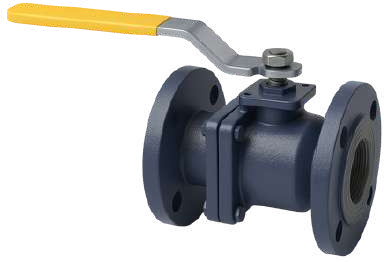
Flanged 2 Piece Ball Valve
Ball Valves
- Bağlantı
- DIN1092-2
- Çalışma basıncı
- PN16
- Çalışma sıcaklığı
- • GG25 Cast Iron: -29°C / +1...
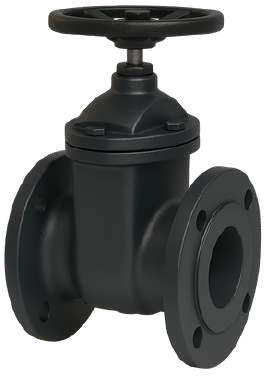
Gate Valve PN16 DIN3216
Gate Valves
- Bağlantı
- DIN1092-2
- Çalışma basıncı
- PN16
- Çalışma sıcaklığı
- -10°C / +120°C
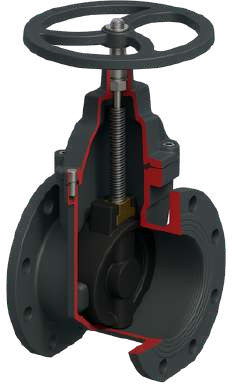
Resilient Seated Gate Valve
Gate Valves
- Bağlantı
- DIN1092-2
- Çalışma basıncı
- PN16
- Çalışma sıcaklığı
- -10°C / +120°C
Read next
Related articles
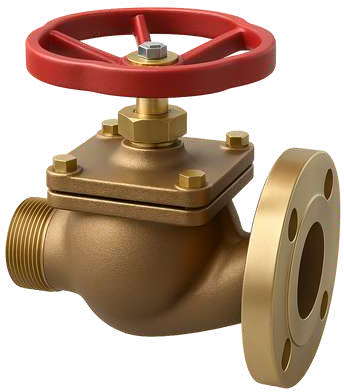
Fire Line Fittings and Periodic Inspection
Fittings on a fire line may stand unused for years and must work first time at exactly the moment they are needed.
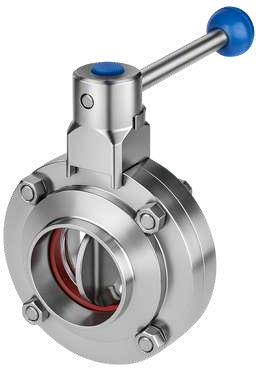
Butterfly Valves: Space and Cost Advantage on Large Diameters
On large-diameter lines, a butterfly valve instead of a gate valve usually saves space, weight and cost at once.
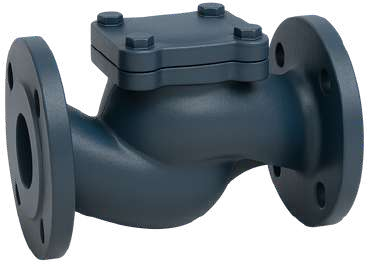
Check Valve Selection and Water Hammer
A check valve stops reverse flow; the real question is how quickly it stops it. A slow-closing check valve becomes the source of w...
Let us select the right product for your project
You can write to our technical team with questions about the topic in this article.